 Tres Rios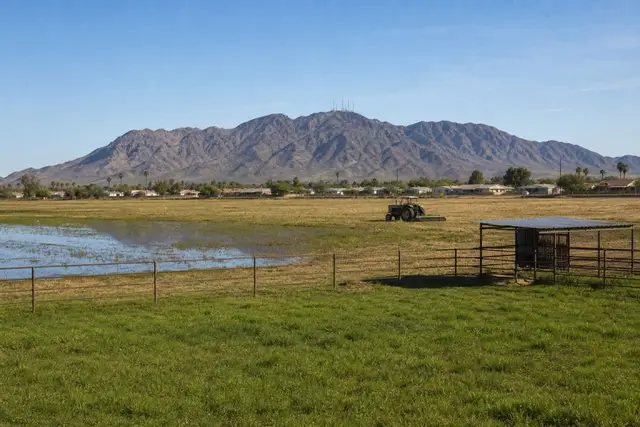
Tres Rios Land Clearing connects Laveen property owners with a local land clearing contractor for clearing, mulching, and brush work across the Laveen area.
Laveen occupies the wedge between South Mountain and the Salt-Gila confluence — farm country since 1884, dairy-and-alfalfa country for most of a century, and now a Phoenix urban village where new rooftops and surviving horse properties share the same section lines. The clearing market follows that split personality: acreage owners keeping working ground working, and new-lot owners taming parcels that were pasture two years ago.
For the horse and hobby-farm set, the list is classic irrigated-acreage maintenance: pastures brush-hogged before tumbleweed season, fence corridors cleared wide enough to drive, ditch banks kept clean enough to carry water, and the corner of the parcel that got away grubbed back into turnout. Flood irrigation still runs across much of Laveen, which makes protecting borders and grades part of every competent clearing plan.
The village's growth years — accelerated since the Loop 202 extension opened through Laveen in late 2019 — added the second clientele: owners of acre-and-up lots carved from former fields, dealing with Bermuda thatch, volunteer mesquite, and the debris of farm decades surfacing in their soil. Same machines, different scope: one-time transformations rather than seasonal upkeep, priced from a walk of the actual parcel.
Keeping flood-irrigated ground honest
Laveen's surviving pastures work because their grades and ditches still work, and clearing equipment can protect or destroy that inheritance in an afternoon. The competent spec keeps machines off saturated borders, grubs woody volunteers without gouging the laser-leveled plane, and treats every concrete ditch as infrastructure rather than an obstacle. The UA Cooperative Extension has served exactly this kind of small-acreage irrigator since the Valley's farming began, and its guidance on pasture renovation is the standing reference.
The seasonal rhythm is the same as everywhere on the west side — mow before the June dry-out, touch up after monsoon green-up — but Laveen adds the animal calendar: turnouts cleared in rotation so stock always has somewhere to stand, and everything that comes out of the ground magnet-swept where hooves will follow. It is detail work, and it is the difference between a clearing contractor and a machine with an invoice.
Village edge: where pasture becomes lot
Laveen's conversion parcels carry farm history in the soil — buried irrigation pipe, fence wire from three eras, compacted lanes where the dairy trucks ran — and first-time clearing on them is partly archaeology. Budgeting a discovery allowance is honest practice, and grubbing with an excavator rather than shearing at grade is what keeps that history from resurfacing under the new landscape. Guidance on the urban side — what the city expects on lots inside Phoenix's boundary, including South Mountain's preserve-edge rules — comes with the parcel's jurisdiction, which the quote visit confirms.
Dust compliance follows lot size and disturbance area, and Laveen's wind exposure off the river flats makes it more than paperwork: the county dust rules apply above a tenth of an acre disturbed, and cleared ground is finished — stabilized, not abandoned bare — as part of the job rather than as someone's later problem.
Further reading
Good to know
Do you maintain pastures on a seasonal schedule in Laveen?
Yes — standing arrangements are the efficient way to hold irrigated acreage: a pre-summer mow, a post-monsoon touch-up, and fence corridors kept driveable. Seasonal customers get priority scheduling in the storm-cleanup crunch, which matters in July.
What does clearing a converted farm lot cost?
Acre-scale first-time clears in Laveen typically land in the low-to-mid four figures depending on woody density and what the soil gives up — buried wire and pipe add sorting and disposal time. The quote separates vegetation, grubbing, and debris so the number stays legible.
Can you work around livestock on the property?
Routinely. Work rotates through turnouts so animals always have safe ground, gates are managed behind every machine move, and cleared areas get a magnet sweep before stock returns. Your animals' routine is part of the job plan, not an inconvenience to it.
Will clearing hurt my flood irrigation setup?
Not done properly — machines stay off wet borders, grades are respected, and ditches are cleaned rather than crushed. If a border or turnout needs re-forming after grubbing, that earthwork is quoted explicitly instead of quietly skipped.
Which rules apply — Phoenix or county?
Laveen parcels split between Phoenix city limits and unincorporated county, and requirements differ at the margins. The contractor checks the parcel's jurisdiction as part of quoting; county dust rules apply either way once disturbance crosses the threshold.